This sand is the embodiment of our mothers.
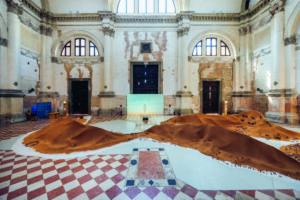
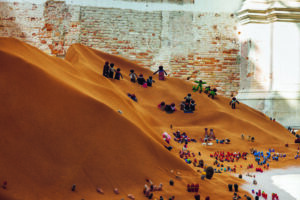
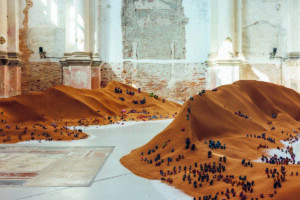
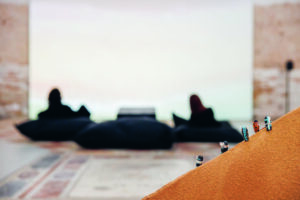
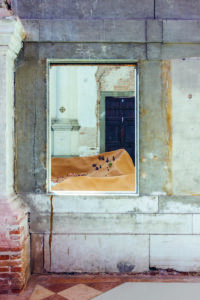
In the first aisle, the Repatriates Collective welcomes visitors with an immersive installation that combines various elements: sand, thousands of figures made from shell and fabric, video and sound.
The installation, which at first glance appears as a vast dune composed of sand carried in part from Noeleen Lalara’s land in the Gulf of Carpentaria, where land and water meet at the edge of a world in flux. Here, the tide brings with it the detritus of global industry: tangled nets discarded from fishing vessels that drift along the shore. Once tools of sustenance, these ghost nets now threaten the life of turtles, birds, and fish. They leave a trail of destruction in their wake, suffocating the coastline.
Women like Lalara, who tends their mothers’ sand dunes overlooking the vast expanse of the Pacific, show us the resilience of communities and the ways they cultivate the resources that sustain them.
Not only well-known antiques like the Benin Bronzes, marbles, or oil paintings have been selected for repatriation from European cultural institutions. There were also small, hand-made dolls, which are not just sculptures but sacred vessels of fertility, that were returned to the Warnindilyakwa in Australia and to Windhoek, Namibia.
The film, part of the installation and sharing the same title, begins with the digging for materials, preparing for the redressing of Dadikwakwa-kwa (shell dolls). The makers are deeply focused on their process, to which the film intimately bears witness. They are not performing for the camera but absorbed in the labor of adorning the shells as part of a wider set of social experiences. They dress the shell dolls in Namibian fabrics in preparation to send them to meet you here in Venice. Blessings are spoken to them by the elders before departing on their journey.
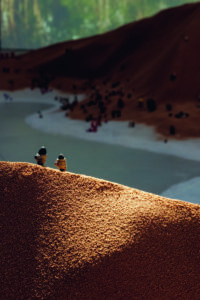
The soundscape in the space and in the film, together with the topography of sand dunes, evokes the Aboriginal belief that sound carries wisdom across water. Totems, clans, and songlines are embedded in the landscape, with thousands of figures transforming the dune into a chorus of ancestral messengers. Together, they bridge communities across continents, reaffirming Indigenous knowledge and resistance.
